
Call us now :08045805092
 Send Inquiry
 Send Inquiry
Rivet Nut
MOQ : 1000 Pieces
Rivet Nut Specification
- Diameter
- Varies by specification, commonly 6mm to 12mm
- Head Size
- Available in various sizes (typically M3 to M12)
- Standard
- DIN, ISO, or equivalent international standard
- Head Type
- Flat head
- Usage
- industries,furniture
- Material
- Stainless steel or carbon steel
- Size
- M3 to M12
- Function
- Provides a strong and secure thread in thin or soft materials
- Weight
- Lightweight
- Surface
- Smooth, zinc-plated finish
- Feature
- High strength, corrosion-resistant, easy installation
- Shape
- Cylindrical with knurled body for anti-rotation
- Color
- Metallic silver
- Installation Method
- Requires rivet nut tool for fastening
- Thread Type
- Internal thread
- Application
- Sheet metal, automotive, electrical enclosures, machinery
- Tensile Strength
- High, varies by grade and size
- Corrosion Resistance
- Excellent for stainless steel variants
- Finish
- Electroplated, polished, or passivated
- Temperature Resistance
- Up to 300C depending on material
Rivet Nut Trade Information
- Minimum Order Quantity
- 1000 Pieces
- Supply Ability
- 10000 Pieces Per Day
- Delivery Time
- 2-3 Days
About Rivet Nut
Rivet Nut, also known as a threaded insert or blind rivet nut, is a fastener that is used to securely join two or more objects together. It is a cylindrical metal fastener that has a threaded hole in the center and is designed to be installed from one side of a workpiece, hence the name "blind" rivet nut. Rivet nuts are commonly used in applications where access is limited or where a strong, reliable connection is needed. They are installed by drilling a hole in the workpiece and then placing the rivet nut into the hole. Once inserted, a special tool is used to expand the base of the rivet nut, causing it to grip the sides of the hole and creating a secure, threaded connection. Rivet nuts are made from a variety of materials, including steel, aluminum, and brass, and are available in different sizes and thread types to suit different applications. They are widely used in the automotive, aerospace, and construction industries, as well as in DIY and home improvement projects.
Superior Threaded Fastening in Thin Materials
Rivet nuts provide a sturdy and lasting internal thread even in thin or soft materials where tapping is not possible. Their high tensile strength and anti-rotation knurled body ensure a secure fit, making them a preferred choice for automotive, electrical, and industrial uses. These inserts deliver strong, reliable fastening without distorting the workpiece.
Exceptional Durability and Versatile Finishes
With finishes such as electroplating, polishing, or passivation, rivet nuts exhibit excellent corrosion resistance, especially in stainless steel variants. Available in a smooth, zinc-plated metallic silver, these inserts withstand harsh environments and deliver an appealing surface. Choose from a variety of head sizes (M3 to M12) to suit your specific application needs.
FAQ's of Rivet Nut:
Q: How are rivet nuts installed in sheet metal applications?
A: Rivet nuts are inserted into a pre-drilled hole in the sheet metal and installed using a specialized rivet nut tool. When the tool is operated, the rivet nut's body is compressed, firmly anchoring it to the sheet and creating a secure, load-bearing internal thread.Q: What advantages do rivet nuts offer compared to other fastening methods?
A: Rivet nuts create a robust, reusable threaded connection in thin or soft materials without the need for tapping or welding. They allow for quick, easy installation, provide high tensile strength, are lightweight, and ensure excellent corrosion resistance, especially in stainless steel models.Q: When should I select stainless steel rivet nuts over carbon steel ones?
A: Stainless steel rivet nuts are recommended for applications requiring superior corrosion resistance or exposure to harsh environments (e.g., outdoors, electrical enclosures, or near moisture). For most general or lower-budget uses where moderate corrosion resistance suffices, carbon steel variants are suitable.Q: Where are rivet nuts most commonly used?
A: Rivet nuts are widely used in automotive manufacturing, sheet metal fabrications, electrical enclosures, machinery assembly, furniture, and in many industrial and commercial products where strong threads are needed in thin materials.Q: What is the typical process for installing a rivet nut?
A: First, a precisely sized hole is drilled in the base material. The rivet nut is then placed into the hole, and a rivet nut tool secures and deforms the insert, causing it to grip tightly to the substrate and locking it in place to prevent rotation.Q: What benefits does the knurled body design provide?
A: The knurled body on rivet nuts offers enhanced resistance to spinning within the host material. This design ensures the nut remains firmly in place during and after installation, even under torque or vibration.Q: Who supplies rivet nuts in India and what standards do they meet?
A: A wide network of dealers, manufacturers, suppliers, traders, and wholesalers across India offer rivet nuts that meet DIN, ISO, or equivalent international standards, ensuring quality and compatibility for various applications.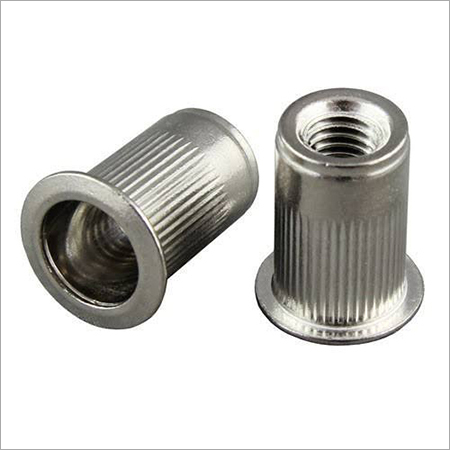
Tell us about your requirement

Price:
Quantity
Select Unit
- 50
- 100
- 200
- 250
- 500
- 1000+
Additional detail
Mobile number
Email

More Products in Metal Bolt Nuts Category
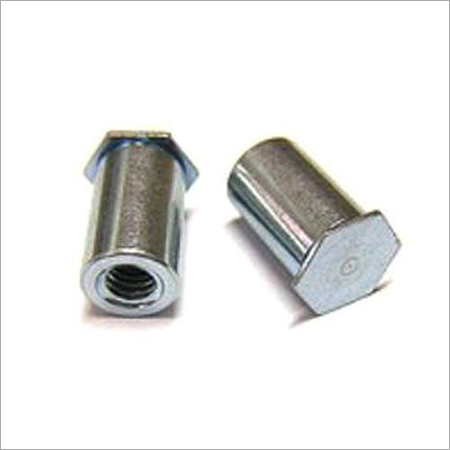
Self Clinching Blind Standoff
Minimum Order Quantity : 1000 Pieces
Surface : Other, Electroplated zinc or passivated finish for corrosion resistance.
Material : Other, Highgrade stainless steel (A2/A4), carbon steel, or aluminum.
Feature : Blind standoffs provide a closedend design to prevent the passage of screws or foreign matter.
Head Size : Typically ranges from 6 mm to 10 mm, depending on thread size.
Diameter : Thread sizes generally available from M3 to M6 or as custom specified.
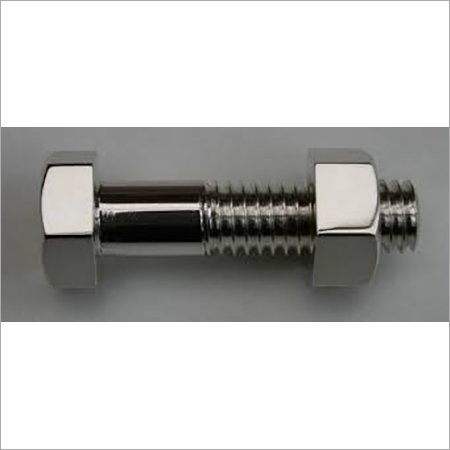
High Tensile Bolt Nut
Minimum Order Quantity : 100 Kilograms
Surface : Polishing
Material : Stainless Steel
Feature : Good Quality
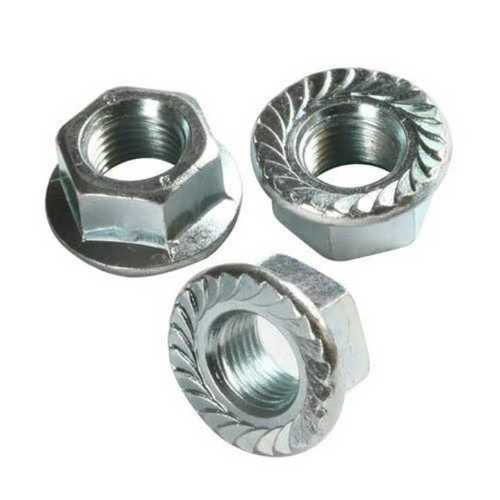
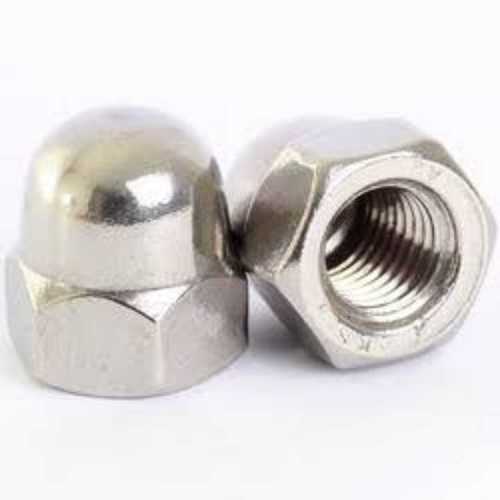
Dome nut
Surface : Other, Polished, Smooth, Chrome/Nickel/SS finish
Material : Other, Stainless Steel, Brass, Mild Steel
Feature : Corrosion resistant, Rust proof, Secure fit, Decorative finish
Head Size : Available in M3 to M20
Diameter : M3, M4, M5, M6, M8, M10, M12, M16, M20


 Send Inquiry
Our Products
- Bakelite knobs
- Automatic Lubrication Units
- Solenoid Valves
- Camlock Coupling
- Steel Balls
- Air Blow Gun
- Metal and Industrial Nuts
- Metal and High Strength Bolts
- Metal Bolts
- Metal and Machine Screws
- Metal Bolt Nuts
- Hoses and Hose Fittings
- Fiber Yarns and Threads
- Automobile Interiors and Accessories
- Hydraulic and Pneumatic Tools
- Industrial Valves and Valve Fittings
- Metal and Machine Washers
- Industrial Pipe and Tube Fittings
- Rivets and Shackles Fasteners
- Hand Slide Valve
- Coolant Pipe
- Anchor Bolt
- Hand Operated Grease Pump
- Hydraulic Pipe Clamp
- Air Compressor Pressure Switch
- Automobile Body Coach Building
- Push In Fittings
- Pin Type Anchor Fasteners
- Air Hose Reel
- Hydraulic Quick Release Coupling
- PU Tube Cutter
- Oil Indicator
- Clamp Knobs
- Janatics Pneumatic PVC Pipe
- Janatics Pneumatic FRL Unit
- Janatics Pneumatic Tube Fittings
- Polyurethane Tube
- Polyurethane PU Tubings
- Pneumatic Cylinder
- Pneumatic FRL Unit
- Green PU Rope
- Junction Blocks
- Grease Nipples
- Brass Ball Valve
- Brass Medium Pressure Mini Ball Valve
- Zoloto Butterfly Valve
- Hydraulic Flow Control Valve
- Zoloto Gate Valves
- Ball Plunger Screw
- Corroshield Screws
- Butterfly Valve


115, K K Arcade, 1St Floor, 98 Narayan Dhuru Street,Mumbai - 400003, Maharashtra, India

Mr Jitendra M Shah
(Director)
Mobile :08045805092
 Send Inquiry
 Send SMS
Developed and Managed by Infocom Network Private Limited.


 English
 Spanish
 French
 German
 Italian
 Chinese (Simplified)
 Japanese
 Korean
 Arabic
 Portuguese